
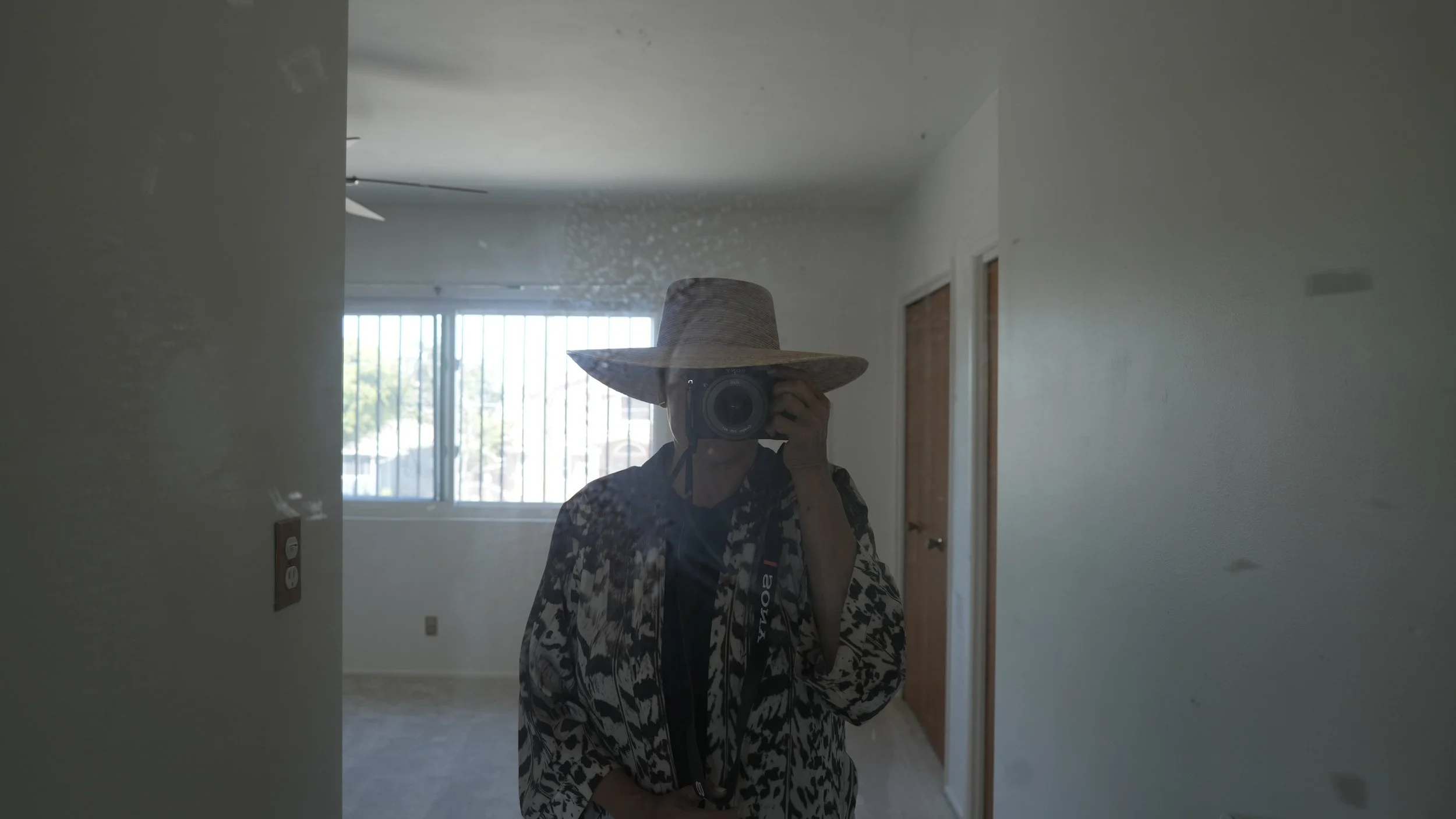
The Mall as Mirror: The Rise and Fall of the Hawthorne Mall as the Reflection of Intersectional Injustice in the Built Environment
Hawthorne, California, founded in 1905, and named after the New England author Nathaniel Hawthorne, is located in Los Angeles County. It has become a living example, a microcosm of how systemic racism has become embedded structural racism. Originally a White’s-only “sundown town,” it was later downgraded through redlining, and the racism was eventually incised into the fabric of the city by the I-105 freeway’s completion in 1993. These legal, and architectural dominoes, set the foundation of what came after: the rise and abandonment of the Hawthorne Plaza Mall; the excavation of the million square foot Boring tunnel, the Hawthorne Municipal Airport, and the lingering remnants of the military industrial complex. Together these layers render Hawthorne an indicative metaphor for the intersectional entanglement of social, health, economic and environmental injustices.

Reclaiming the Center:
My first job was at a bookstore inside a mall that has been dead longer than it was open.

Hawthorne House Artists in Residence
UEC announces the inaugural cohort for the Hawthorne House – Case Study Residency.

An ending, A beginning.
Seventeen years ago, October 11, 2008, I photographed an Eagle Scout troop building the dry arroyo parkway along Arlington Drive, and it changed my life.

Negative Space
All the days that I have lived in Los Angeles can be charted through the spaces that I have occupied, domestic and institutional.

Soil Testing for Contaminants
On Sunday, March 30, we hosted a virtual workshop titled Soil Testing for Contaminants, led by Dr. Danielle Stevenson, founder of the Center for Applied Ecological Remediation, and UEC Founder & President, Michelle Matthews. The workshop provided participants with essential protocols for soil contaminant testing, covering key topics such as the importance of testing soil, how to design an effective soil sampling plan, techniques for collecting samples, what contaminants to test for, and how to interpret test results.

Journal of Solastalgia
Solastalgia is not about looking back to some golden past, nor is it about seeking another place as ‘home’. It is the ‘lived experience’ of the loss of the present as manifest in a feeling of dislocation; of being undermined by forces that destroy the potential for solace to be derived from the present. In short, solastalgia is a form of homesickness one gets when one is still at ‘home’. Glenn Albrecht