
The Mall as Mirror: The Rise and Fall of the Hawthorne Mall as the Reflection of Intersectional Injustice in the Built Environment
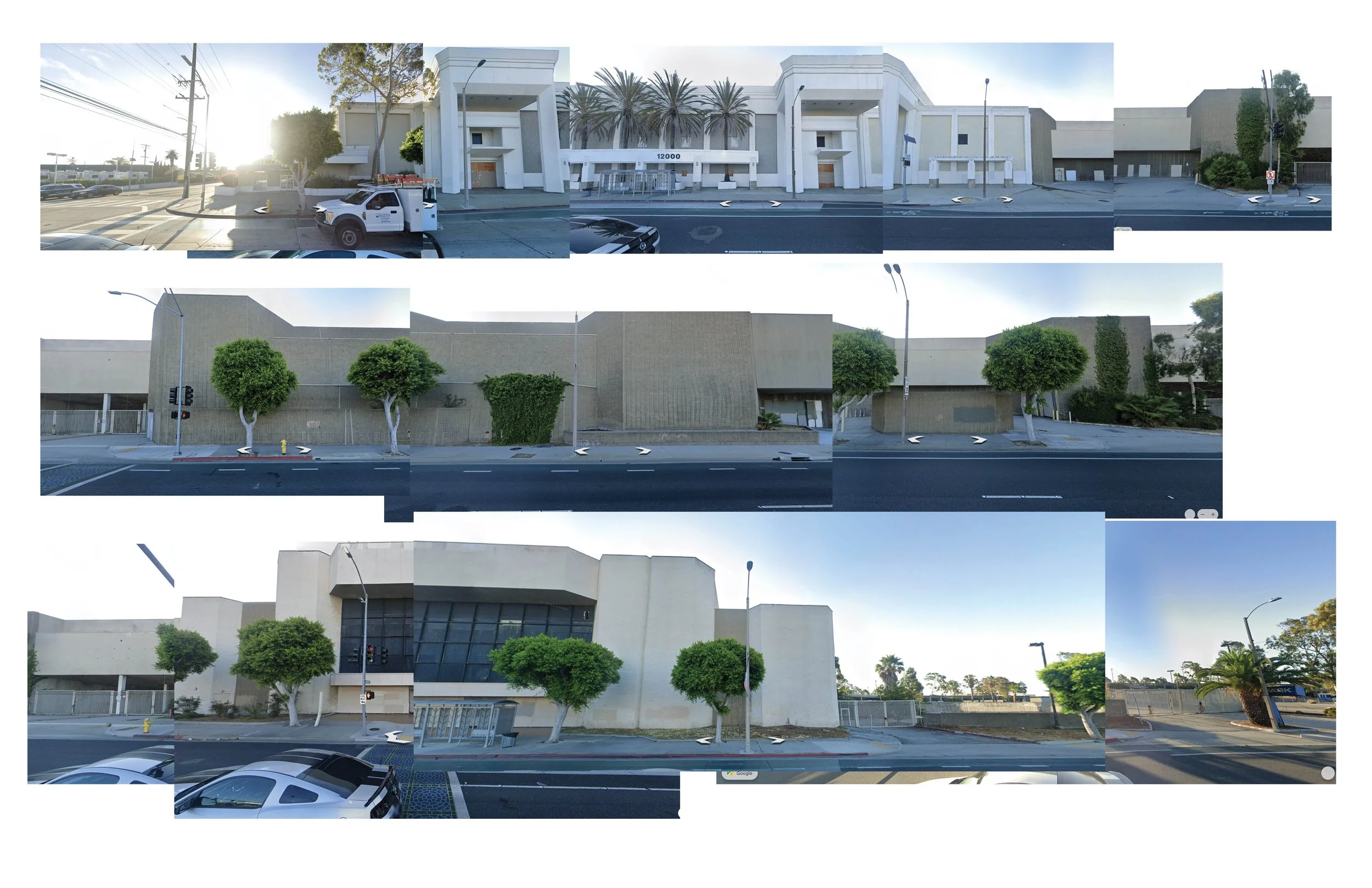
Photo: Matthews, Michelle. (2026). Hawthorne Plaza Mall Collage.
Hawthorne, California 90250
Hawthorne, California, founded in 1905, and named after the New England author Nathaniel Hawthorne, is located in Los Angeles County. It has become a living example, a microcosm of how systemic racism has become embedded structural racism. Originally a White’s-only “sundown town,” it was later downgraded through redlining, and the racism was eventually incised into the fabric of the city by the I-105 freeway’s completion in 1993. These legal, and architectural dominoes, set the foundation of what came after: the rise and abandonment of the Hawthorne Plaza Mall; the excavation of the million square foot Boring tunnel, the Hawthorne Municipal Airport, and the lingering remnants of the military industrial complex. Together these layers render Hawthorne an indicative metaphor for the intersectional entanglement of social, health, economic and environmental injustices.
When I was 15 in 1991, my father took me to learn how to drive on the dirt footprint of the 105-century freeway, while its construction was plowing down the street just blocks from our house. He had me do doughnuts and kick up a dust cloud until we were chased off by security. We had moved to the area in 1987. My father, a self-taught technical writer, wanted to live near the beach, and he worked at nearby Howard Hughes, and Northrop Grumman, on the B-52 Bomber, Apache Helicopter and on manuals for nuclear warheads.
Our family, a racially ambiguous assemblage of Black, Chinese and White, ended up living directly underneath the leaded fueled flight path of the Hawthorne airport. My recollection was that we were not shown any houses in “nice” neighborhoods by the white realtor, Lawrence Lawrence, from Guy Hocker Realty in the neighboring beach adjacent communities of Manhattan Beach, or Hermosa Beach. Instead, we were sold and my parents bought their 1962 subdivided house in Hawthorne, California, that was directly underneath the flightpath of the Hawthorne airport. They lived there from 1987, until my father’s death by suicide May 2023, and my mother’s death just eleven months later from Amyotrophic Lateral Sclerosis.
Hawthorne was a White’s only, also known as a Sundown town, in the 1930s. At the time, it virtually had no Black residents, while according to the 2020 U.S. Census, it is nearly a quarter Black. Sundown towns historically enforced exclusionary practices aimed at keeping minorities, and in particular, African American’s out after dark. These communities often became known as “sundown towns” because some of them placed signs at their city limits or railroad stations that typically said, “Ni**er, Don’t Let the Sun Go Down On You In — Hawthorne, California” (Loewen, 2022, p.58)
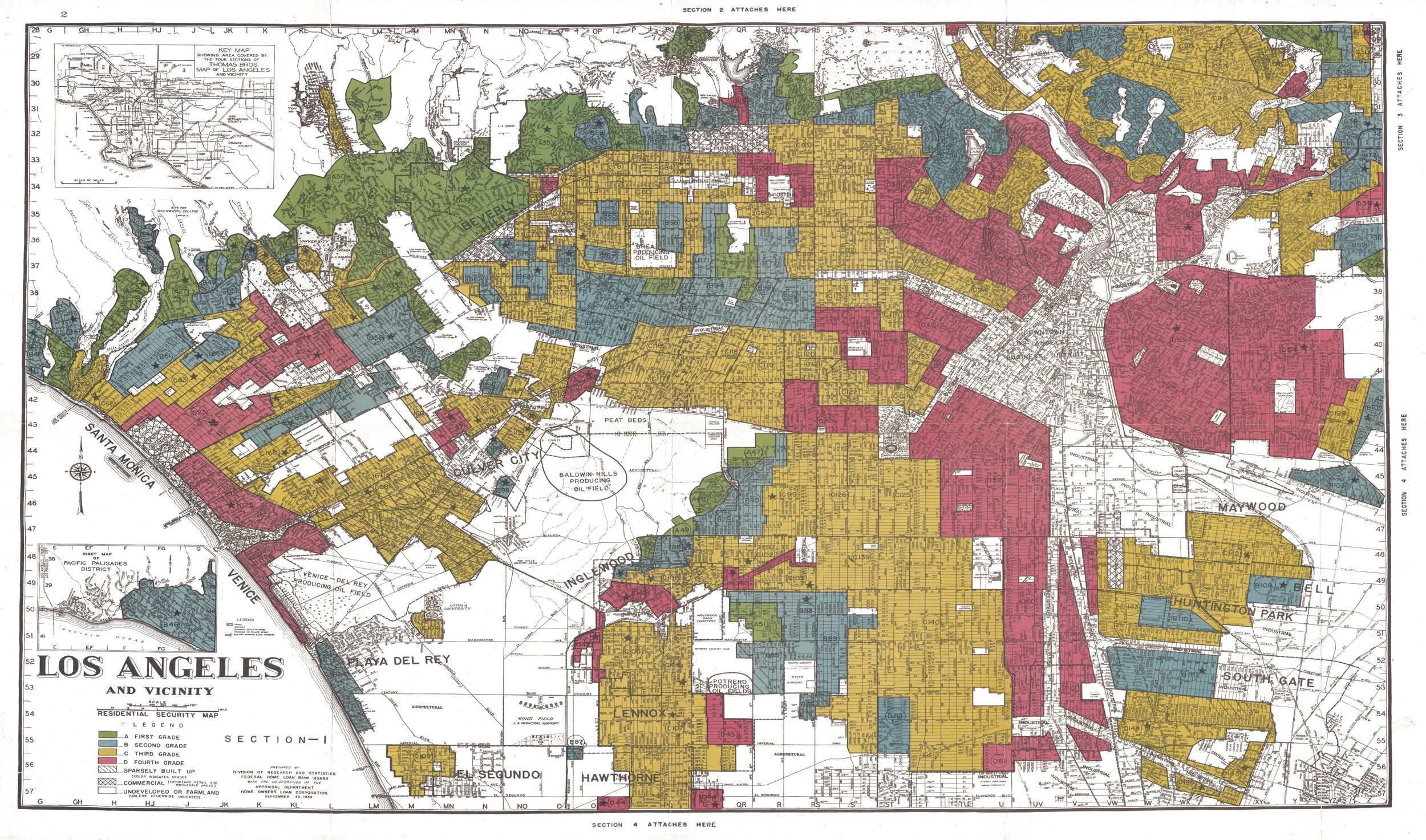
At the same time, the racially discriminatory Home Owners Loan Corporation (HOLC) maps of the 1930s, graded Hawthorne, between a “C-Declining,” and a “D-Hazardous.” The neighborhood once had demographics as 79% native-born white, 14% foreign-born white, 4% African American, and 2% Japanese, native and foreign born (Nelson et al., 2023). A century later, the data has inverted almost completely. U.S. Census data show Hawthorne today at 55% Hispanic, 23% African American; 9% White; and 9% Asian. Additionally, with 14.7% of residents living in poverty. Hawthorne, one of the 239 cities with populations over 40,000 that the HOLC graders defined a redlined, has become a majority nonwhite city carrying an elevated poverty rate, despite the presence of economic powerhouses like Northrop Grumman, Howard Hughes, SpaceX, Starlink, Tesla, and more recently, Archer Aviation who became the master tenant at the Hawthorne Airport in 2025, as the official air-taxi provider for the 2028 Olympics.
A 2022 study by Dr. David J.X. Gonzalez, shows, “people living in neighborhoods that received poorer HOLC grades have higher risk of asthma, cancer, cardiovascular disease, (and) gun violence-related injuries,” (Gonzalez, 2022, p.77). I have asthma, my mother had breast cancer, diabetes and high blood pressure and both my father and brother both died by gun suicide. Living in Hawthorne, and driving back and forth between University High School, located 12-miles away, and at the base of wealthier communities of neighboring Santa Monica Mountains—Brentwood, Santa Monica and Bel Air and Beverly Glen—I experienced this difference viscerally. In the smell of the air, the beauty of their backyard gardens on meandering hillsides, mostly from the healthy urban tree canopy that was and still is visibly lacking in Hawthorne.
The mall’s own tormented history illustrates this same function, both as societal mirror and as a symbol of Hawthorne’s disenfranchisement. In 1965, the Hawthorne City Council adopted an ordinance authorizing a local redevelopment agency to conduct planning and feasibility studies for a commercial area of the city. By the winter of 1968, the council had retained Victor Gruen Associates to prepare plans for what would become the Hawthorne Plaza Mall, with Charles Kober Associates eventually serving as architect. Before the mall’s gargantuan construction, the site displaced an open-air plaza, an earlier, more porous version of the same civic instinct, to give the city a center.
The Hawthorne Plaza Mall conceived in 1964, opened twelve years later, in 1977, on a 35-acre brutalist footprint. For a while it worked. Then, across the 1980s and 1990s, it unraveled. The Hawthorne Historical Society (2024) attributes the decline to “the collapse of the area’s aerospace industry, white flight and competition from other nearby shopping centers.” The 1992 Los Angeles riots, after the acquittal of four LAPD officers in the beating of Rodney King, further accelerated the malls decline. The mall had reached a peak of 130 retail tenants; by 1994 that number had fallen to 87. In 1999, just twenty-two years after it opened, the Hawthorne Plaza Mall was closed. As of the writing of this paper, the mall has been dead longer than it was alive, and is currently in the process of being demolished.
The mall’s collapse did not happen in isolation from the larger economic architecture of the era. The 1993 passage of the North American Free Trade Agreement (NAFTA) restructured American retail and manufacturing supply chains in ways that knee-capped the kind of anchor-tenant department stores malls depended on, (World History Journal, 2025). The federal tax credits that had subsidized new construction through the postwar decades expired around the same window, removing the financial scaffolding that had propped up marginal properties like Hawthorne Plaza, which I will discuss in more detail later on. The 1999 repeal of the Glass-Steagall Act, which had separated commercial and investment banking since the Depression, allowed commercial banks to move into investment activity, a shift that would help produce the conditions for the 2008 financial crisis (World History Journal, 2025).
The mall sat dead, for over a quarter century. In 2021, the City of Hawthorne sued the developer The Charles Company, and its affiliate M&A Gabaee, and won a judgement demanding the building be razed or demolished by August 31, 2026. Demolition set to begin August 14, 2026, forty-nine years after the mall opened and twenty-seven years after it closed.
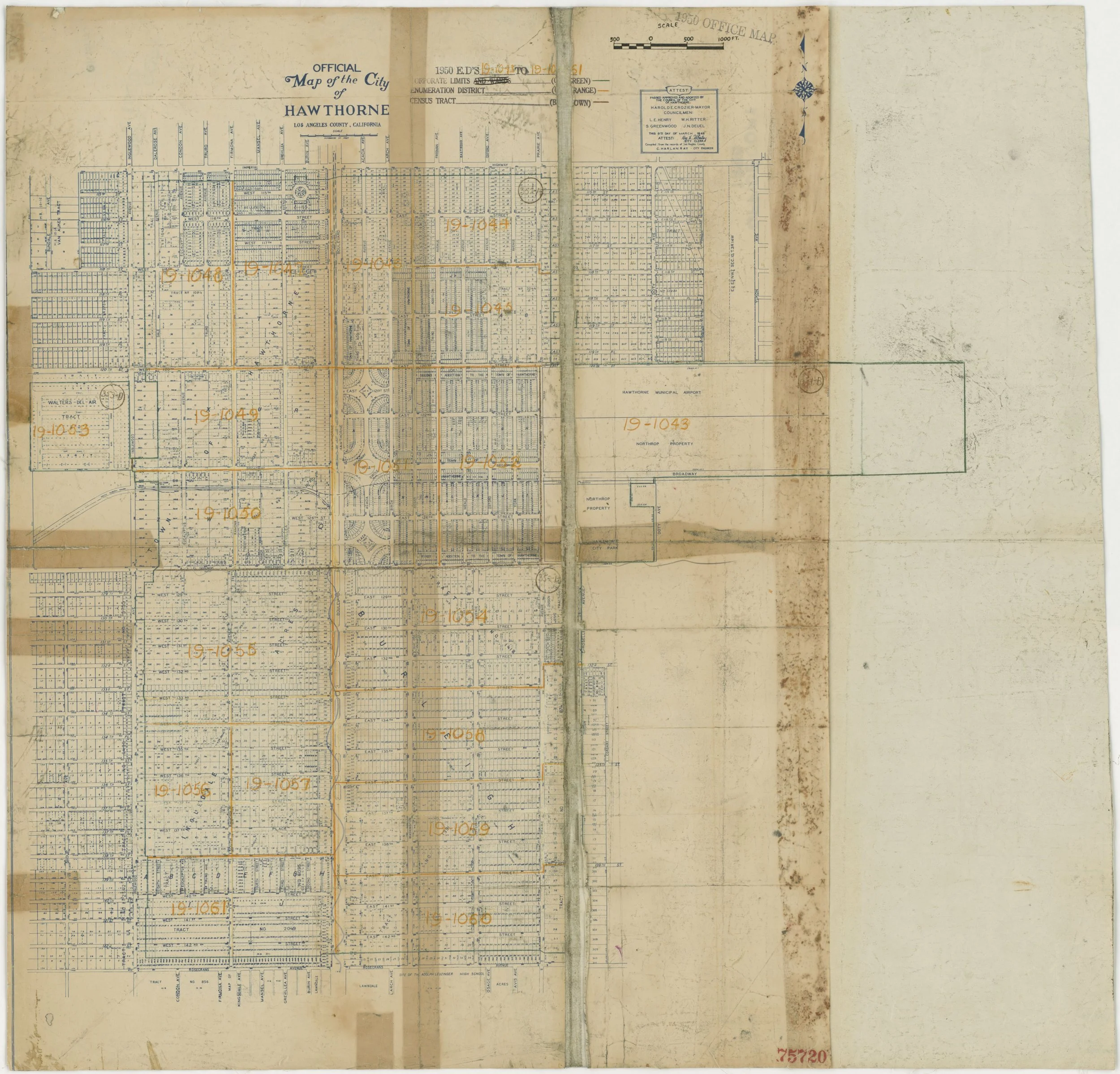
1950 Census Enumeration Map
A Cultural Mirror
Over the two and a half decades since its closure, the Hawthorne Plaza Mall has become one of the more recognizable ruins in American film and television. The building’s first prominent screen appearance that I am aware of, came in Evolution (2001), Ivan Reitman’s sci-fi comedy, and it remains the only film I have seen where the mall’s interior appears seemingly intact, still legible as a place people once shopped rather than a contemporary ruin. Everything after marks the mall’s shift from a living place to a metaphor.
By Minority Report (2002), the space had already begun its second life as a stand-in for dystopia. Westworld (2016) used it as a vision of civilizational collapse; and Taylor Swift's Ready for It (2017) placed it inside a sci-fi vision of dystopian fantasy. The throughline across nearly all of these is unambiguous: when Hollywood needs to show us the end of the world, it shows us Hawthorne. The one exception is Beyoncé’s Superpower (2013), which used the mall not as a symbol of collapse but as a site of resistance, gathering and defiance.
The television series, Stranger Things (Duffer & Duffer, 2019) was never filmed at Hawthorne Plaza however it manifests what the mall represents in our social psyche. The Netflix teen horror fantasy, functions as the ecstasy of 1980s consumer culture gone wrong, and Hawthorne Plaza is the literal version of that same story: a living manifestation of the church of capitalism curdling into something rotten. The fictional Starcourt Mall and the real Hawthorne Plaza are doing the same cultural work from opposite directions, one fictional horror, and one a very real manifestation, of layers of social, environmental, and economic injustices.
A dead mall does not simply sit and decay; it becomes severed, precisely because the relationship between place and its people is bifurcated. The mall became a dead place – since 1999 removed from the fabric of relationship, stewardship, regeneration and reciprocity. Now, it is a time capsule of brutalist architecture gone wrong. From the home of the Beach Boys, to Tyler, the Creator, from a White’s only sundown town, to being redlined, the failure of the Hawthorne mall reflects the catastrophic lack of investment in a city and its people. It eventually took a lawsuit from the City of Hawthorne, to hold the developer accountable for the ruin that the mall had become. The City still struggles to rectify, and reconcile the embedded overt, and structural racism of it beginning, and its people are living with the consequences.
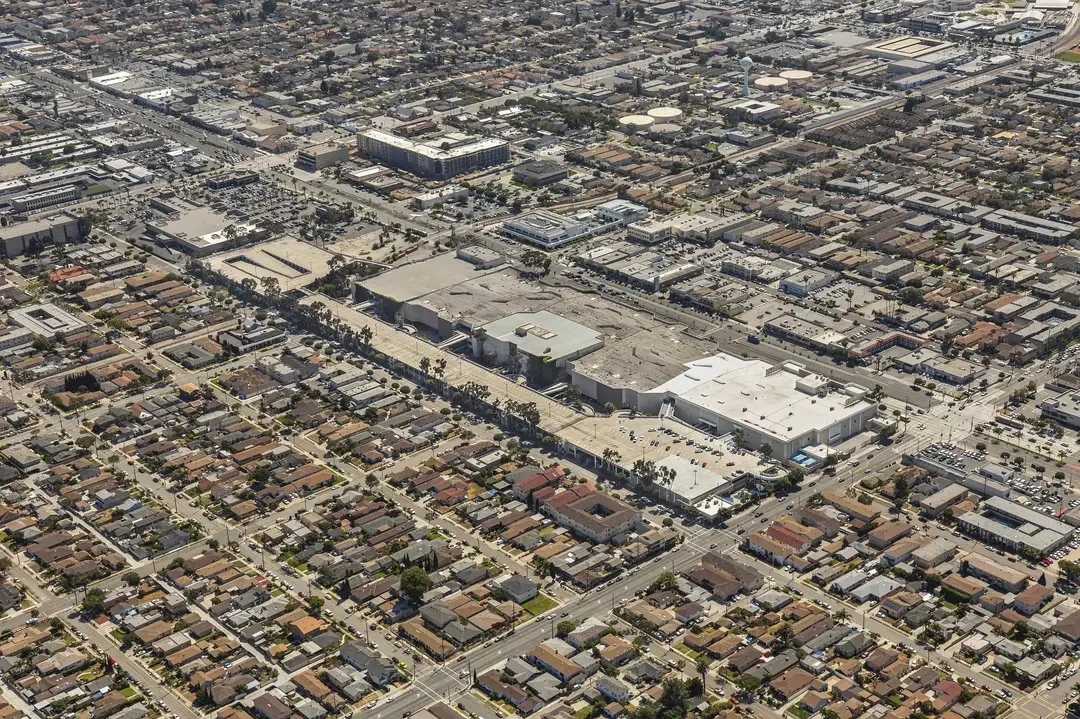
Hawthorne Plaza Mall Aerial Photo
The Economic Mirror
The story that gets repeated often about dead malls is almost always an e-commerce villain story: online shopping killed the mall. In Hawthorne Plaza Mall, the mall closed in 1999, prior to the e-commerce boom. The real story implicates the same economic architecture that defined Hawthorne itself. Congress accelerated the depreciation schedule for new commercial construction in 1954, which meant a developer could deduct a fixed share of a building’s value from taxable income every year regardless of what happened to the building. “A forty-million-dollar mall generated a million dollars in annual depreciation deductions, tax-free money that made building a mall a better investment than buying stocks,” (Lamare, 2025). Developers built accordingly: by 1995, the country had over 41,000 shopping centers, including roughly 1,800 large regional malls. Today, fewer than 900 remain, and that number keeps falling (Capital One, 2025). With the Internal Revenue Code of 1954 (Public Law 591), the 83rd Congress allowed accelerated depreciation, encouraging investment in new real estate construction, and new construction “by allowing investors to depreciate commercial real estate investments in a way that encouraged new building over maintaining or renovating existing properties” (Howard & Stobart, 2018). The expiration of the law gave owners no financial reason to modernize their properties, because the tax-free depreciation money kept flowing whether or not the mall was maintained. When Congress eliminated accelerated depreciation in the 1980s and replaced it with straight-line depreciation, that subsidy disappeared, and the malls built under the old incentive began aging out of their owners’ interest in them, a process that ran from roughly the mid-1990s through 2015, which is nearly the exact window of Hawthorne Plaza’s own decline and closure. The mall was not abandoned because shoppers stopped wanting to shop there. It was abandoned because the tax code that made it profitable to build had already been rewritten to make it unprofitable to keep. This is the deeper argument beneath the freeway and the redlining maps: Hawthorne was shaped, first by the housing and infrastructure policy, and second by a tax code that determined which buildings were worth maintaining and which were not.
My first job was at the B. Dalton Bookseller in 1992; my older brother worked at the Wild Pair. We would walk to the mall, and got professional retail experience. What the Hawthorne Plaza Mall’s closure cost our community was never just retail. It was jobs, connection, community, a shared gathering space, and one of the last third places available to young, elderly and families, without having to pay an admission fee.
The Environmental Mirror
One of the first differences I noticed between my home and my friends’ homes in Westwood, Bel Air, and Beverly Glen was the trees. In the fall, their neighborhoods smelled of Santa Ana winds moving through Pine, Oak, and Sycamore, especially in the fall. My own high school, University High School, part of LAUSD, one of the largest school districts in the country, is now a charter school whose campus is home to the Kuruvunga Sacred Springs. In 2017, I went back to the campus and identified a State Champion, the largest of its species, a Taxodium Mucronatum, growing just yards from the football field.
That environmental contrast is reflected in the data: my childhood home carries an overall CalEnviroScreen Score in the 83rd percentile, with high cumulative exposure to pollution, including groundwater contamination, contaminated sites, hazardous waste, traffic density, PM2.5, Diesel PM, and Small Air Toxic Sites. According to the California State parks Community Fact Finder, Hawthorne has 0.1137 Parks per 1,000 people and are made up of severely disadvantaged communities.
This relationship between infrastructure and land followed me into my professional life. For seven years I was the Executive Director of Arlington Garden in Pasadena, a 2.5-acre site that was originally designated as a construction site for the connection between the 210 and 710 freeways. That freeway connection was never built. The garden is now 21 years old, a green space that exists only because a highway didn’t. Hawthorne’s own freeway was not so easily stopped. As legal scholar Deborah Archer writes in, “White Men’s Roads through Black Men’s Homes,”
Highways were built through and around Black communities to physically entrench racial inequality and protect white spaces and privilege. The physical boundaries they created would become permanent tools of white supremacy, boundaries that could withstand the evolution of civil rights laws. Rather than be forced to comply with the law, the highways were the law (Archer, 2020, p.1267-1268).
Archer’s insistence that the boundaries of the freeway as the permanent tools of white supremacy, encapsulates my lived experience, and is something I didn’t learn in any school.
The fact that the Interstate-105 had been part of the 1960s master plan for the freeway system, but it did not open until 1993, intersecting an area in Hawthorne that had been redlined with a “C” and “D” grade. The consequences of that grade have extended well past the freeway itself, almost one hundred years later. As Gonzalez et al. found, “people living in neighborhoods with worse HOLC grades have less access to environmental benefits such as greenspace and experience higher summertime temperature extremes” (Gonzalez, et al, 2022, p 77).
The Boring Company (TBC), founded as a subsidiary of SpaceX in 2017, completed a 44-feet below ground test tunnel in Los Angeles County, in Hawthorne CA along 120th street between 2016 and 2018, including an underground elevator that was installed inside a residential garage at 3834 West 119th Place. Elon Musk’s frustration with Los Angeles traffic, was to build an underground network of tunnels. Instead of invest in public infrastructure, transportation, and improving the quality of life for his employees in Hawthorne, the then headquarters of SpaceX and Tesla, he dug massive tunnels.
Air quality tells a similar story. On October 17, 2022, the EPA released a finding, “Proposed Finding That Lead Emissions from Aircraft Engines That Operate on Leaded Fuel Cause or Contribute to Air Pollution That May Reasonably Be Anticipated to Endanger Public Health and Welfare,” though the study is no longer accessible on the EPA’s website. Small airports like Hawthorne Airport across the country, still operate leaded aviation fuel planes, which although planning to be phased out by 2030, no safe alternative yet exists (Tyree, 2026, July 1).
A few miles away, in wealthier Santa Monica (AKA Silicon Beach), the local airport is set to close in 2030, driving overflow traffic most likely to Hawthorne. The same aviation risk that one city is moving to eliminate, persists unaddressed, in the other. The California Healthy Places Index, puts my child hood home, at the 29.5th percentile. It’s not at all a healthy place. Adjoining this with the Cal Enviro Screen score at the 83rd percentile for pollution and vulnerability combined, it exposes a chasm that was defined almost 80 years ago, with redlining, the military industrial complex center of the Hawthorne Airport, the incision of the 105 freeway, and most recently, the 1.14 mile, 14’ foot diameter, Boring tunnel to nowhere.
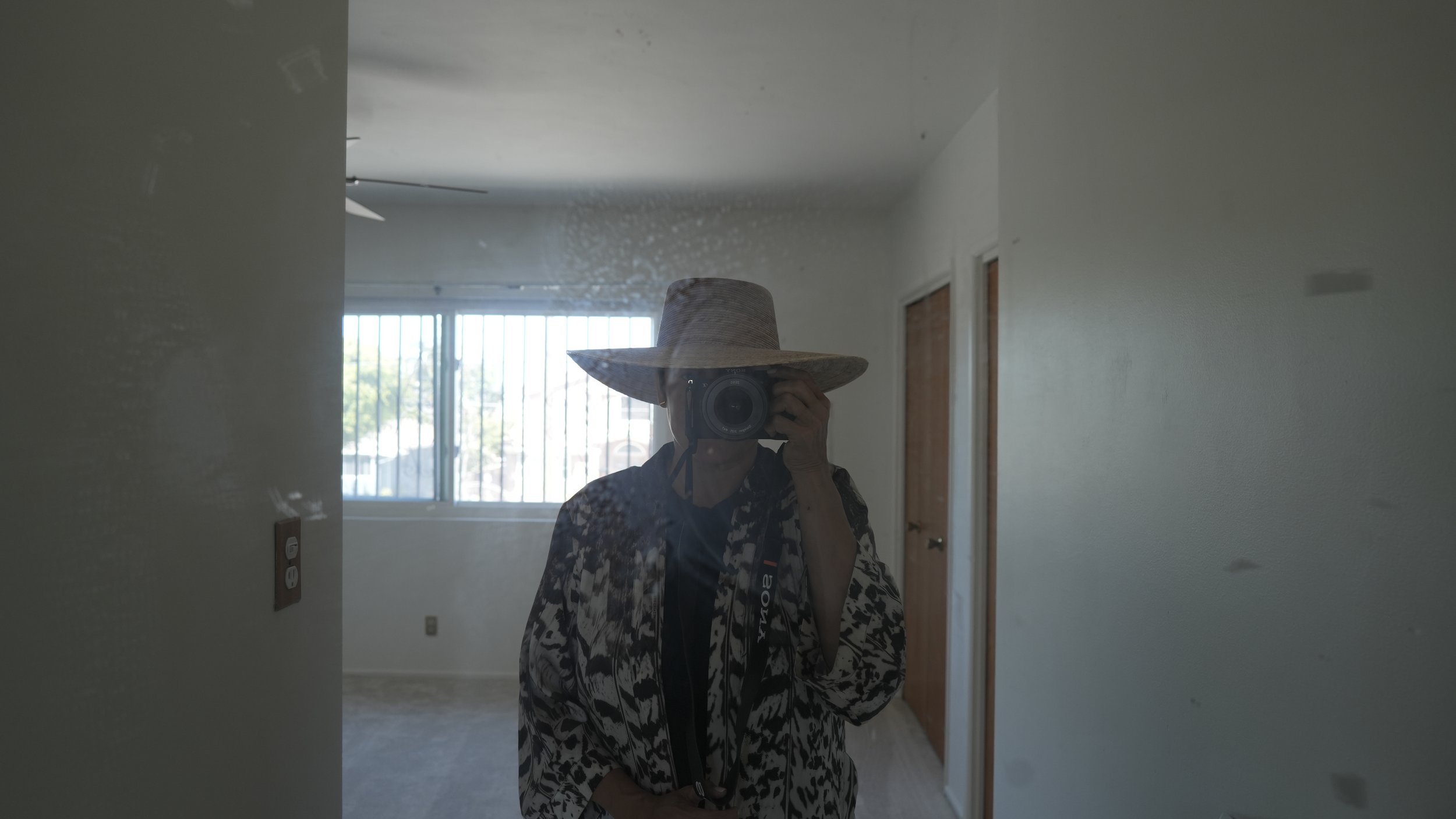
The Intersectional Mirror
Place makes us, as much as we make place. Hawthorne Plaza mall is dead, and its demolition will erase the last physical trace of a building that was meant to last eons, then sabotaged, then left to stand for twenty-seven years as a monument to disinvestment. What the Mall has reflected: racism as a sundown town, racism through redlining, black and brown neighborhoods paved over for the freeway, extractive policy, air pollution from leaded aviation fuel, urban heat. None of it resolves through erasure.
Historical, cultural, economic and environmental mirrors, when sewn together, tell the story of intersectional injustice. The freeway that cut through Hawthorne, is also the freeway that never reached Arlington Garden. The tax code that made Hawthorne Plaza profitable to build, is the same code that made it unprofitable to keep. The HOLC grade that determined who could buy a home, is the same grade that decided that people of color will breathe leaded aviation fuel and have higher rates of lead in their blood. Intersectionality helps us understand the layers of injustice that have been absorbed by nearly every form of disinvestment.
I am a product of this place, more than I have ever been able to affect it. I learned to drive on the dirt path of the massive above grade, and now drive on the elevated 105 freeway to exit South on Crenshaw Blvd. While tens of thousands go North to the SoFi stadium just 2.5 miles away, completed in 2020. My family metabolized what the airport put into the air, and I am the only surviving adult in my immediate family. The center of our neighborhood, the mall closed before I even knew what a third space was. Structural harm, does not stay invisible, it metastasizes into cancer, asthma, diabetes, high blood pressure, suicide loss, and grief.
What comes next for the 35-acres where the mall stood is being decided, by many of the same business as usual civic and economic forces, without recognition for the intersectional injustices that have caused societal, economic and environmental harm. My hope is that we will not repeat the same extractive logic that built then abandoned it. A regenerative reuse of the land, rooted in reciprocity and right relationship, rather than depreciation schedules, and in community stewardship, rather than developer ownership. Such a reuse would be the first time the mirror reflected something other than racism. The mall is being demolished. What is not yet decided is what will be grown in its place, and who that will be for.
A working precedent already exists. At Señaḵw in Vancouver, the Squamish Nation is returning to land from which its people were forcibly removed more than a century ago. Phase One alone is bringing 1,409 homes, prioritized for Squamish People, with dedicated units reserved for Squamish Members and community governed pathways for the rest (Squamish Nation, 2026). This is not redevelopment it is land back. The land was not merely made available to the people it was taken from, it was given back into their governance. Hawthorne sits on Tongva land, and the 35 acres where the mall stood will not, under any process currently underway, be returned to the Tongva. Señaḵw, names a regenerative reuse that we haven’t been able even imagine for ourselves.
The story of the Hawthorne Plaza Mall, and of Hawthorne itself, is a mirror: it reflects the choices we make, and in this case, their failures. Hawthorne, California: shaped by the whims of the military industrial complex and billionaire techno-fascists, a sundown town and later a redlined city, mirrored by the production of cultural icons from The Beach Boys to Tyler the Creator, is itself the reflection of the cultural production, economic extraction, environmental burdens, and intersectional harm that manifest in the built environment and habitat of the city (or lack thereof). A regenerative return to living in right relationship with the land and the built environment would help us reorient our anthropocentric worldview toward the space in between.
References
Archer, D.N. (2020). “White Men’s Roads through Black Men’s Homes”: Advancing racial equity through highway reconstruction. Vanderbilt Law Review, 73(5), 1259
https://scholarship.law.vanderbilt.edu/vlr/vol73/iss5/1
Beyoncé. (2013). Superpower [Video]. Parkwood Entertainment; Columbia Records.
Capital One Shopping Research. (2026, June 5.). Mall closure statistics: How many malls have closed? Capital One Shopping. Retrieved August 11, 2026, from https://capitaloneshopping.com/research/mall-closure-statistics/
Environmental Protection Agency, (2022, October 17). Proposed finding that lead emissions from aircraft engines that operate on leaded fuel cause or contribute to air pollution that may reasonably be anticipated to endanger public health and welfare. Federal Register, 87(199), 62760–66. https://www.govinfo.gov/content/pkg/FR-2022-10-17/pdf/2022-22223.pdf
Gonzalez, D.J.X., Nardone, A., Nguyen, A.V. et al. Historic redlining and the siting of oil and gas wells in the United States. Journal of Exposure Science & Environmental Epidemiology (33), 76–83 (2023). https://doi.org/10.1038/s41370-022-00434-9
Hawthorne Historical Society. (2024, March 27). The story of the Hawthorne Plaza. [Website] https://hawthornehistoricalsociety.org/the-story-of-the-hawthorne-plaza/
Howard, V., & Stobart, J. (2018). Arcades, shopping centres and shopping malls. In J. Stobart & V. Howard (Eds.), The Routledge companion to the history of retailing (pp. 195–213). Routledge. https://doi.org/10.4324/9781315560854-12
Kim, J., et al. (2024). Historical redlining is associated with disparities in environmental quality across California. Environmental Science & Technology Letters. https://doi.org/10.1021/acs.estlett.3c00870
Lamare, A. (2025, September 22). The unexpected reason there are so many empty and abandoned malls. GOOD. [Website]. https://www.good.is/shopping-malls-abandoned/
Lane, H. M., Morello-Frosch, R., Marshall, J. D., & Apte, J. S. (2022). Historical redlining is associated with present-day air pollution disparities in U.S. cities. Environmental Science & Technology Letters, 9(4), 345–350. https://doi.org/10.1021/acs.estlett.1c01012
Lathan, N. (2023, September 20). 50 years after being outlawed, redlining still drives neighborhood health inequities. UC Berkeley School of Public Health. https://publichealth.berkeley.edu/articles/spotlight/research/50-years-after-being-outlawed-redlining-still-drives-neighborhood-health-inequities
Loewen, J. (2007). Exhibiting Sundown Towns, Museums & Social Issues,
(2:1), 57-76, DOI: 10.1179/msi.2007.2.1.57
Nelson, R. K., Winling, L., Marciano, R., Connolly, N., et al. (2023). Area description: Los Angeles, CA [Area C107]. In R. K. Nelson & E. L. Ayers (Eds.), Mapping inequality: Redlining in New Deal America. American Panorama. [Website]. https://dsl.richmond.edu/panorama/redlining/map/CA/LosAngeles/area_descriptions/C107
Nolan, J. (Director). (2016, October 2). The original (Season 1, Episode 1) [TV series episode]. In J. Nolan & L. Joy (Creators), Westworld. HBO.
Nelson, R. K., Winling, L., Marciano, R., Connolly, N., et al. (2023). Area description: Los Angeles, CA. In R. K. Nelson & E. L. Ayers (Eds.), Mapping inequality: Redlining in New Deal America. American Panorama, University of Richmond. [Website]. https://dsl.richmond.edu/panorama/redlining/map/CA/LosAngeles/area_descriptions/C107
Reitman, I. (Director). (2001). Evolution [Film]. DreamWorks Pictures; Columbia Pictures.
Spielberg, S. (Director). (2002). Minority Report [Film]. 20th Century Fox; DreamWorks Pictures.
Shadbehr, Arnold; James, Brian; Planning & Community Development (2018, September 11). Agenda Item No. 9 (Planning report) (Report). Agenda Bill. City of Hawthorne City Council. Archived from the original on November 24, 2018.
Tyree, J. (2026, July 1). Leaded avgas ends in 2030. The replacement fuel isn't ready yet. GlobalAir.com. https://www.globalair.com/articles/leaded-avgas-ends-in-2030-the-replacement-fuel-isnt-ready-yet/12474
U.S. Census Bureau. (2025, August 11). QuickFacts: Hawthorne city, California. U.S. Department of Commerce. https://www.census.gov/quickfacts/fact/table/hawthornecitycalifornia/PST045225
Wells, M. (2022, September 6). The economic history of the shopping mall — and its future (yes, it does have one). Econ Focus, Federal Reserve Bank of Richmond. https://www.richmondfed.org/publications/research/econ_focus/2022/q3_economic_history
World History Journal. (2025, October 21). The presidency of Bill Clinton: Economic policies and legacy. https://worldhistoryjournal.com/2025/10/21/bill-clinton-presidency/
